Around a Tuscan hill village: read the landscape in three layers
Roofs, slopes and the horizon help turn a view into something more than a postcard.
Begin at the edge of the village
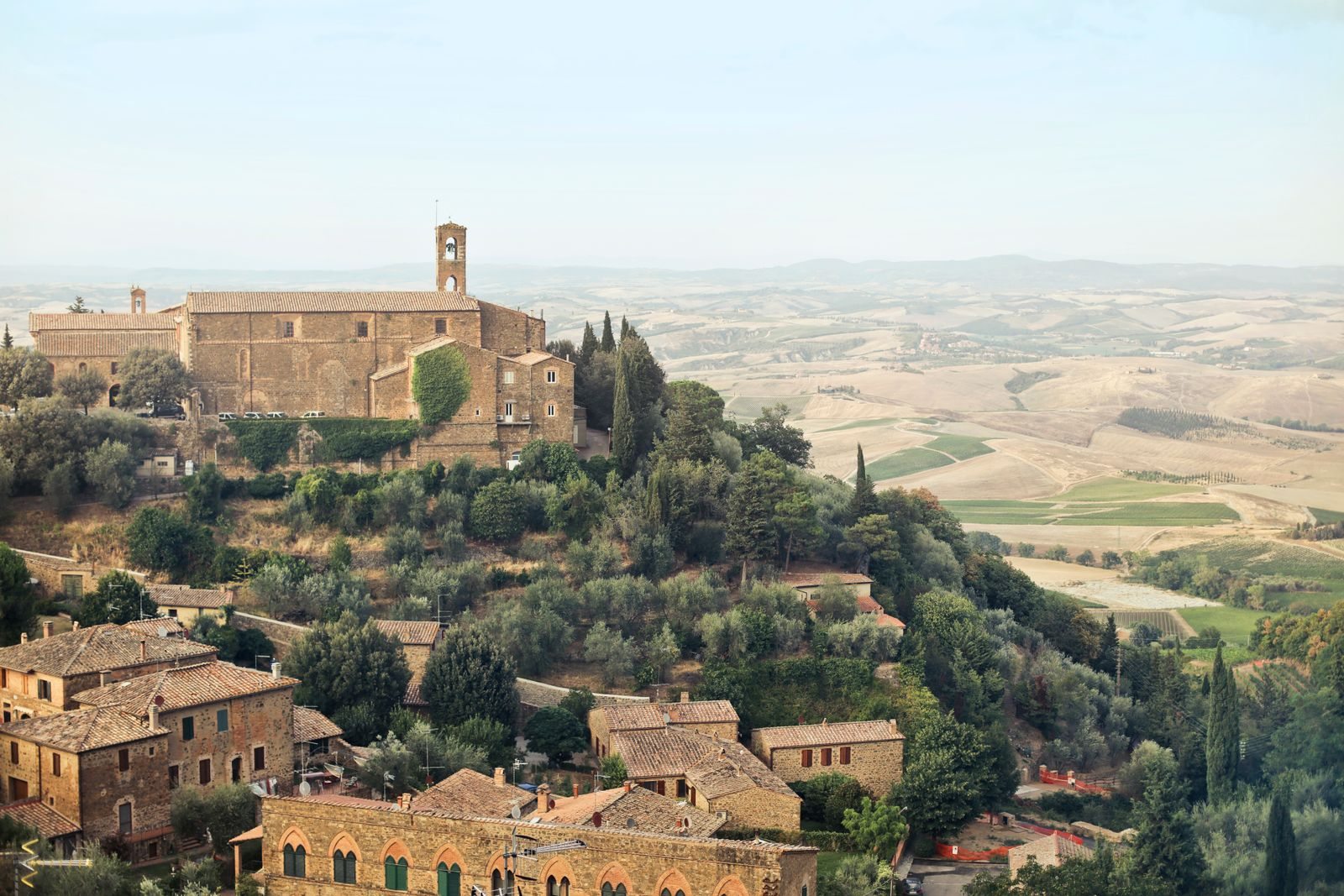
To understand a hillside view, find a public place from which the settlement and countryside appear together. A terrace, pedestrian stretch or square may be enough, provided stopping is permitted. Notice where houses end and gardens, walls and slopes begin. That transition is often more interesting than an entirely open panorama. Avoid entering a courtyard because it seems ideal for a photograph, and do not stand across a private entrance. The position from which you look forms part of the experience just as much as whatever appears along the distant horizon beyond the village.
Separate near, middle and far
In the foreground, look for materials and shapes: a roof, a wall, a tree canopy. In the middle distance, observe contours and the lines of routes. Finally, look at the horizon and how hills overlap. You do not need to assign a precise history to every field; what you do not know can remain a question. Local interpretation panels or a museum can add verifiable context. Avoid calling a landscape untouched when it clearly contains houses, cultivated land and infrastructure: human presence may be exactly what makes the view particularly interesting to consider.
Bring the panorama back into the walk
Returning through the village, find a detail seen from afar and compare the impressions. A tower may dominate a slope-side view but nearly disappear within a street; a square may reveal itself only as you reach it. Choose a short circuit with a clear return rather than following every panoramic opening. If descending towards the countryside, check the route and climb back separately instead of assuming a visible road is automatically appropriate for walking. Good observation connects the settlement with its surroundings and leaves room to return under different light without requiring a longer or more elaborate itinerary.
Look at buildings and countryside together, then find a village detail you noticed from afar.