Use your phone without following it all day
Keep directions and bookings handy while leaving room to look around.
Decide what you need it for
Before leaving, identify the functions you actually need: a map, ticket, contact or a few photographs. Put that information somewhere easy to open. Searching for an address inside a long conversation invites you to read everything else and makes it harder to stay focused on the place.
If you must remain reachable, choose an approach compatible with your commitments. You do not have to disappear from communication to enjoy a walk. You can reduce unnecessary notifications and set aside a moment for messages without changing settings that might prevent something important from reaching you.
Read the map while standing still
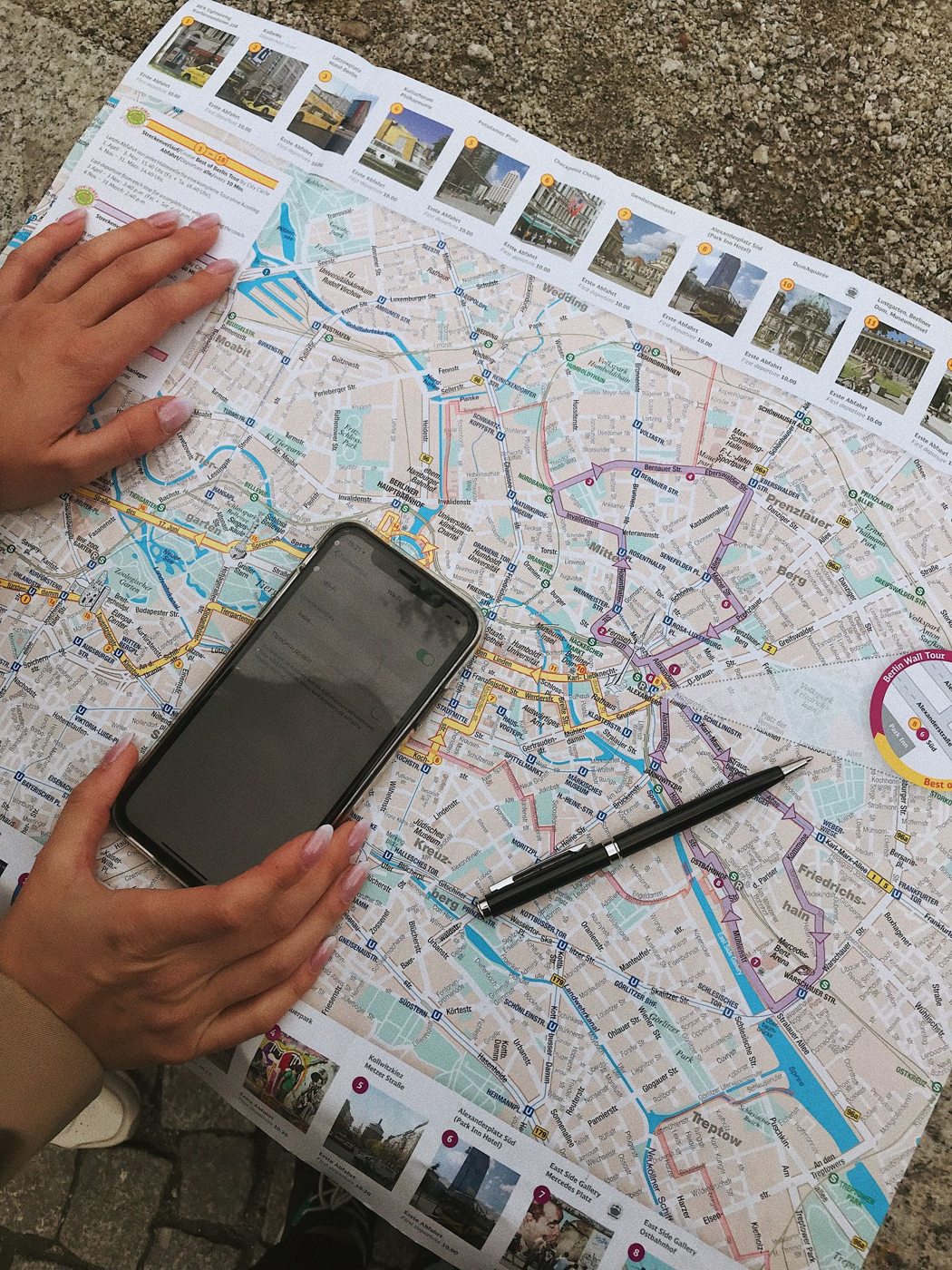
Step out of the flow of pedestrians when checking directions. Identify the next turn and a recognisable landmark, then put the phone away for the stretch you understand. Constantly following the moving dot can distract from surfaces, signs or simply the landscape you came to see.
A paper map or a note with a few landmarks can accompany the device. It does not need to replace every digital resource. It only needs to reduce how often you unlock the screen. Keep important transport updates and local conditions available when they are needed.
Separate taking and sharing photographs
You can take a photograph without publishing it immediately. Separating the two actions lets you choose an image later when seated with time available. Respect signs and requests before photographing people or private spaces. An attractive scene is not automatically somewhere you can freely document.
When travelling together, agree on a meeting place before separating. A physical reference alongside your phones prevents a flat battery from turning into a lengthy search for one another.
Use the screen to orient yourself, then let the place become the focus again.